
 By
One of the world’s oldest department store chains is preparing to shut down half of its physical retail network as mounting financial pressures threaten its future after nearly 188 years.
The major restructuring will affect 19 stores and put approximately 1,500 jobs at risk.
Founded in Sydney, Australia, in 1838, David Jones is a premium department store chain selling luxury and upscale brands across fashion, beauty, homewares, and other categories.
The retailer’s latest troubles come after years of financial losses, growing competition, and mounting pressure to restructure its operations.
David Jones is closing half of its store network
David Jones is closing 19 of its 38 stores across Australia and New Zealand, equivalent to half of its physical retail footprint.
The stores set to close are:
- New South Wales: 7
- Green Hills
- Hornsby
- Macarthur Square
- Macquarie Centre
- Parramatta
- Warringah Mall
- Wollongong Central
- Victoria: 3
- Glen Waverley
- Highpoint
- Malvern Central
- Western Australia: 3
- Carousel
- Garden City
- Hay Street Mall
- Queensland: 2
- Robina Town Centre
- Sunshine Plaza
- South Australia: 2
- Marion
- West Lakes
- Australian Capital Territory: 1
- Woden
- New Zealand: 1
- Newmarket
The closures will significantly reduce David Jones’ presence in suburban and regional shopping centers, while the retailer also prepares to shut its Hay Street Mall flagship in Perth.
The decision follows a review of the company’s store portfolio, with the receiver determining that a smaller physical network is necessary for the business to continue operating.
Most of the affected locations are expected to cease trading by the end of 2026, although the final closure dates have not been confirmed. Until then, the stores will continue trading, with remaining inventory expected to be discounted or transferred to other locations.
The shutdown will leave David Jones without a physical retail presence in New Zealand and significantly reduce its footprint across Australia.
According to the Shop, Distributive and Allied Employees Association (SDA), 1,689 directly employed workers are affected by the closures. Of those, approximately 170 have been offered redeployment, leaving around 1,500 jobs at risk.
“As part of this restructure, the receivers have commenced an immediate consultation process for all staff associated with 19 stores that have been identified for closure,” FTI Consulting said, as reported by the Guardian.
“For the immediate term these stores will continue trading and while there is no final date for the closures, we anticipate they will cease trading by the end of the year.”
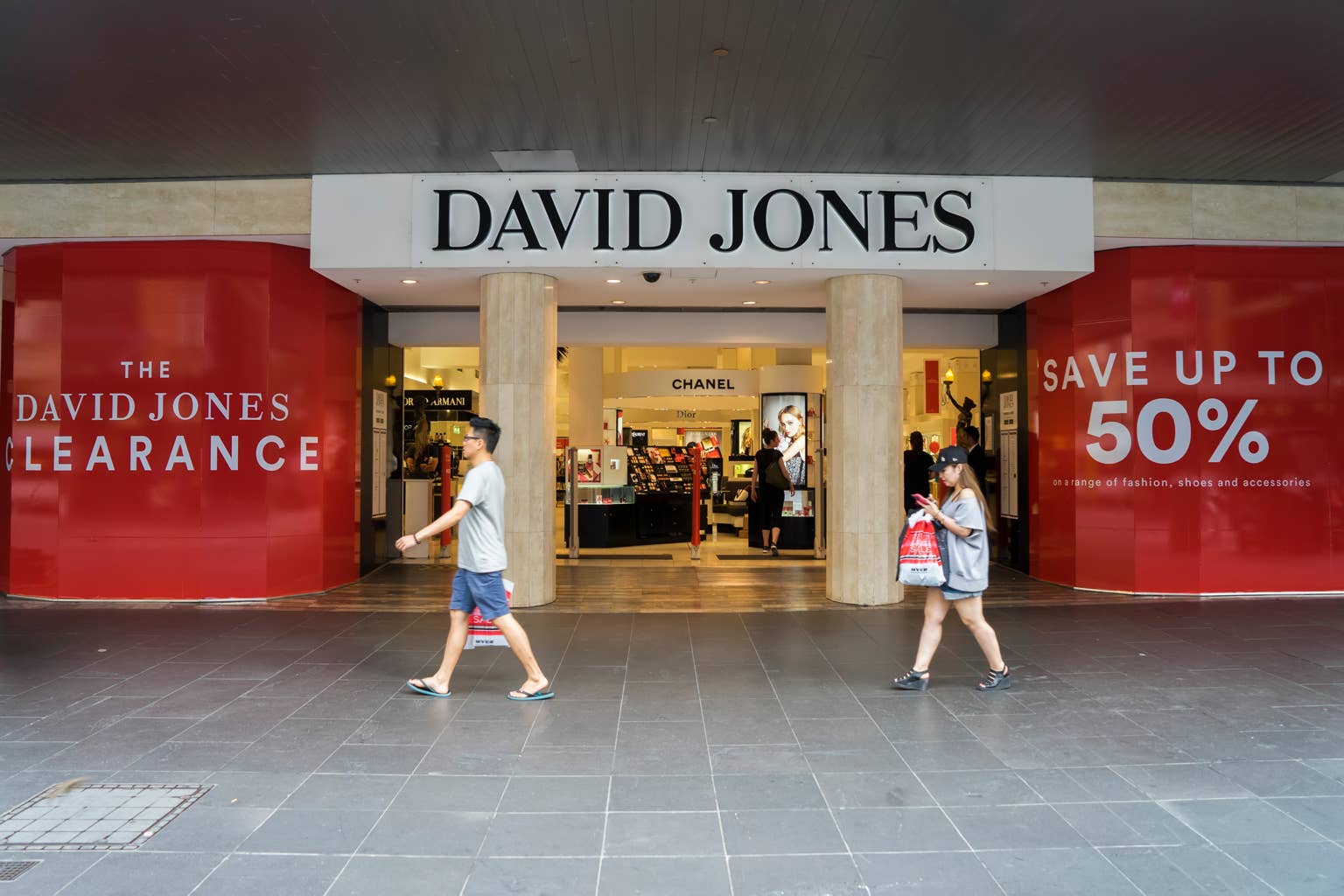
Kokkai Ng / Getty Images
Why David Jones is closing stores
The store closures come less than a week after David Jones entered voluntary administration on Nov. 5.
McGrathNicol was appointed as the retailer’s voluntary administrator after negotiations with major landlord Scentre Group, the owner of Westfield shopping centers, broke down over rent concessions and the company’s proposed restructuring.
David Jones had reportedly fallen behind on its rent payments since September, adding to the financial pressure on the business.
Separately, FTI Consulting was appointed receiver by David Jones’ secured lender, Hilco Global, giving the firm control over the retailer’s ongoing operations.
While McGrathNicol is responsible for assessing the company’s financial position, dealing with creditors, and exploring a potential sale, FTI Consulting oversees the business’s operations and the store closures.
The retailer’s financial obligations are also substantial.
David Jones owes creditors at least A$459 million, according to information presented by administrators at the retailer’s first creditors’ meeting on Nov. 17.
The estimated claims include:
- A$155 million owed to secured creditor Hilco Global.
- An estimated A$80 million claim from Anchorage Capital Partners.
- A$180 million owed to 940 unsecured creditors.
- A$11 million owed to 6,242 employees.
- A$33 million in outstanding gift card liabilities involving approximately 802,319 gift cards.
The administration has also created uncertainty for David Jones’ hundreds of suppliers, many of whom are waiting to learn whether they will recover the money owed to them.
The retailer’s directors cited difficult trading conditions, online competition, inflation, and weak household spending as factors behind its mounting losses.
Administrators are now pursuing a sale process, with potential buyers invited to evaluate the business and submit offers.
Approximately 150 potential buyers have been contacted by administrators, with indicative offers due by Nov. 30, ABC News reported. The process could determine whether David Jones continues operating under new ownership or undergoes further restructuring.
David Jones faces ongoing financial struggles
Although David Jones’ administration filing is recent, the retailer has been struggling financially for years.
During the 2025-26 financial year, David Jones recorded a net loss of A$228 million on revenue of A$2.04 billion, compared with a loss of A$16 million on A$1.99 billion in revenue the previous year.
Here’s some of my previous coverage of retail store closures:
- The ’90s mall brand everyone wore just pulled out of an entire country
- Celebrity-loved fashion brand shuts down after 13 years
- Harvey Nichols closes more stores as others are rebranded
The financial situation worsened further in the months leading up to the administration, with the retailer recording an additional A$69 million loss during the first four months of its new financial year.
Administrators cited weak consumer spending, online competition, changing shopping habits, and an unsustainable store network and cost base among the factors contributing to the retailer’s financial struggles.
The store closures are part of a broader effort to reduce operating costs and make the business more attractive to potential buyers. However, its future will depend on the administration’s outcome and on whether a buyer can establish a sustainable business model.
Related: The ’90s mall brand everyone wore just pulled out of an entire country
